
Common Couples Travel Packing Mistakes: The Definitive Shared Packing Guide
When couples pack together, the point of failure shifts. It moves from individual memory to interpersonal coordination. Packing solo is a simple, linear checklist.
Packing as a couple, however, introduces complex dependencies. A single mistake can strain both physical mobility and relationship harmony. These breakdowns rarely stem from a lack of effort. Instead, they flow from systemic misalignments in space, pacing, and strategy.
The Philosophy of Utility vs. Risk
A frequent point of friction lies in how partners conceptualize utility and risk. One partner might prioritize contingency planning. They pack for unexpected weather, formal events, or sudden medical needs.
The other partner often operates on a minimalist ethos. They assume they can buy any missing items at the destination.
When these philosophies collide without mediation, the baggage footprint satisfies neither strategy. The heavy contingency items burden the minimalist. Meanwhile, the sparse minimalist contributions cause anxiety for the planner.
Navigating Modern Transit Bottlenecks
Modern transit environments compound these internal frictions. Strict airline weight allowances, narrow train corridors, and frantic multi-modal transfers penalize uncoordinated packing. Couples cannot treat their luggage as two independent entities.
True efficiency requires an integrated system. Partners must manage weight, volume, and accessibility collectively. Without this systemic perspective, couples default to predictable operational errors. These mistakes waste time, incur financial penalties, and erode emotional stamina.
Understanding “common couples travel packing mistakes”
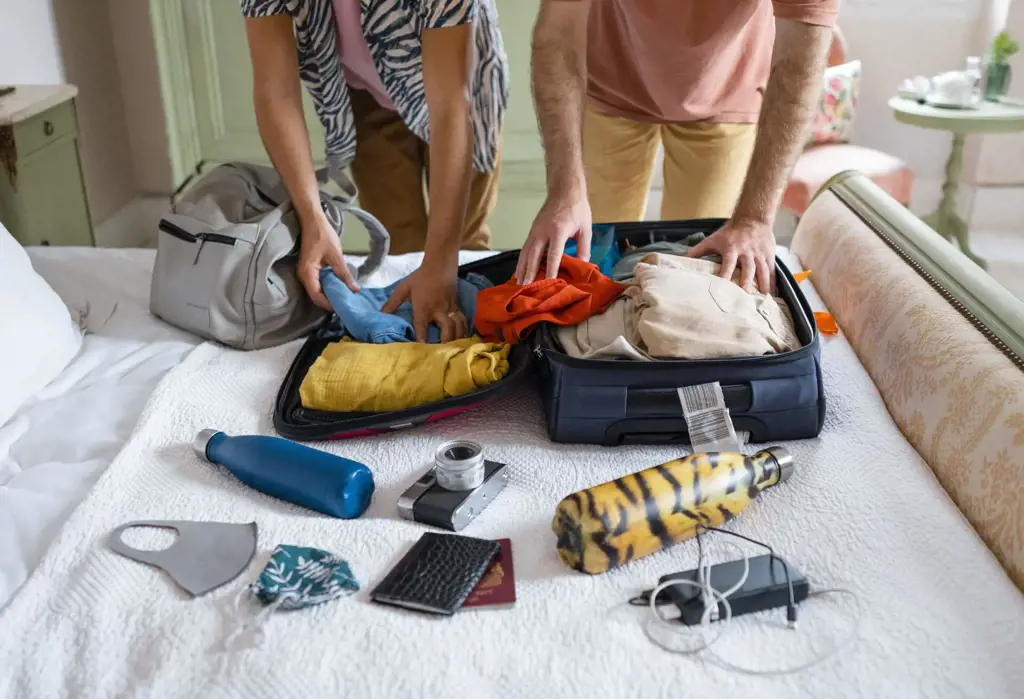
To fix shared transit friction, look beyond superficial symptoms. Forgetting a charger or exceeding weight limits points to a deeper issue. A fundamental optimization failure drives common couple packing mistakes. Partners misallocate shared spatial resources based on uncoordinated assumptions.
Analyzed closely, these errors reveal a systemic vulnerability. Couples frequently treat packing as two parallel solo tasks. They fail to see it as a single, deeply integrated operational challenge.
Manifestations of Unintegrated Packing
This lack of integration manifests in several distinct ways:
-
Symmetric Redundancy: Both individuals pack identical, shareable utility items. Examples include duplicate first-aid kits, hair styling tools, or travel adapters. This effectively halves their collective spatial efficiency.
-
Asymmetric Vulnerability: One partner assumes the other has packed a critical shared resource. Neither person actually brings the physical documents, local currency, or prescription medications.
-
Physical Single-Point-of-Failure: Partners concentrate all critical items into a single piece of luggage. If an airline loses or delays that specific bag, it creates a catastrophic logistical bottleneck.
The Myth of Excess Baggage
A major misunderstanding in co-travel planning is a false belief. Many think packing more items inherently reduces trip anxiety. In reality, excess baggage introduces distinct operational liabilities.
Excess luggage reduces physical mobility during multi-modal transfers. It increases the probability of baggage fees. Furthermore, it lengthens the time spent unpacking and repacking at every destination.
By oversimplifying the process, couples try to cover every conceivable scenario. In doing so, they inadvertently sacrifice their most valuable asset on the road: agility. True optimization requires a delicate balance. You must weigh your luggage against your collective stamina and the actual demands of your itinerary.
Deep Contextual Background: The Evolution of Co-Travel Logistics
The structural dynamics of shared travel have transformed over the past several decades. Historically, point-to-point transit structures defined leisure travel. Ocean liners, long-distance passenger trains, and large automotive trucks made baggage weight a secondary concern.
In those environments, porters and expansive cargo holds insulated travelers from the consequences of over-packing. The domestic unit could transport vast amounts of gear. Transit infrastructure absorbed this high volume by design.
The Rise of Low-Cost Carriers
The rise of deregulated commercial aviation in the late 20th century changed everything. Soon after, the aggressive adoption of the low-cost carrier (LCC) business model completely upended this dynamic. Airlines shifted away from all-inclusive ticket pricing. Instead, they adopted unbundled, a la carte fee structures.
This monetization of cargo weight turned luggage allocation into a direct financial calculation. Suddenly, a couple’s packing habits affected more than just convenience. Their choices directly altered the overall cost efficiency of the trip.
Navigating the Modern, Mobile Itinerary
At the same time, the broader travel landscape shifted toward experiential, highly mobile itineraries. Modern co-travelers rarely spend two weeks at a single resort. Instead, they frequently opt for dynamic, multi-destination journeys. These trips require navigating high-density urban transit grids and narrow train platforms. Travelers must also cross historic pedestrian centers with uneven cobblestone streets.
This environment demands an agile baggage footprint. Traditional, uncoordinated packing habits now actively disrupt a trip’s execution. Couples must routinely lift bags into overhead racks and haul them up subway staircases. They must also fit them into compact rideshare vehicles.
Modern couples must operate under strict resource constraints. Every square inch of suitcase volume carries a premium. This shift explains why modern packing mistakes carry much heavier financial and physical penalties today than in past generations.
Conceptual Frameworks and Mental Models for Shared Luggage
To systematically eliminate common couples’ travel packing mistakes, partners can replace ad-hoc packing lists with structured mental models derived from industrial supply-chain management and systems engineering. These frameworks strip the emotion out of packing decisions, replacing subjective debates about individual items with clear, objective rules for space allocation.
The Single-Entity Luggage Model
This model requires couples to view their collective baggage footprint as a single cargo hold rather than a collection of personal bags. In this framework, partners discard individual ownership of a specific suitcase. Instead, they manage the total volume and weight allocation from a high-level perspective.
- Application: If Partner A’s wardrobe requires more vertical space but weighs less, and Partner B’s gear is dense and heavy, they mix their items across bags to optimize both volume and weight thresholds.
- Limitation: This model demands a high degree of mutual trust and communication, as transit separates individual items from their owners.
Redundancy vs. Resilience Framework
Borrowed from aerospace engineering, this framework distinguishes between wasteful redundancy (packing two identical items that can easily be shared) and functional resilience (distributing critical items across separate bags to mitigate loss).
-
Application: A couple splits their essential wardrobe pieces 50/50 across two checked bags. If one bag disappears in transit, both individuals retain half their clothing, preserving the functionality of the trip.
-
Limitation: This approach requires extra organization during both the initial packing phase and when repacking at intermediate hotel stops.
The Just-In-Time (JIT) Procurement Matrix
This model categorizes all potential travel items by their local availability and the cost of emergency procurement at the destination, discouraging travelers from packing for low-probability scenarios.
-
Application: Items like heavy umbrellas, basic toiletries, and niche over-the-counter medications are left behind if the destination features a robust retail infrastructure. They are purchased only if and when they are actually needed.
-
Limitation: This model is not suitable for remote, rural, or politically volatile environments where consumer goods are scarce or prohibitively expensive.
The Critical Path Method (CPM) for Gear Access
Originating in project management, this framework sequences items based on when and where they will be needed during transit.
-
Application: Items required during the first 24 hours of travel—such as destination visas, booking confirmations, immediate chargers, and basic hygiene products—are placed on the “critical path” in easily accessible exterior pockets of carry-on bags. Deep storage is reserved strictly for items that will not be uncovered until the final destination is reached.
-
Limitation: Any last-minute scramble to open deep-storage compartments disrupts the entire sequence, requiring a full repack of the container.
Key Categories of Packing Misalignments and Operational Trade-Offs
When couples fail to establish a unified packing strategy, their baggage architecture breaks down along predictable lines. Writers and travel strategists group these misalignments into distinct categories. Each category carries its own set of operational trade-offs. These trade-offs directly affect a trip’s pace and financial efficiency. Understanding these divisions helps prevent structural issues. Ultimately, it stops the breakdowns that lead directly to common couples’ travel packing mistakes.
The Mechanics of Asymmetric Weight Distribution
The breakdown of baggage utility rarely occurs uniformly. The issue often centers on how partners manage density. For example, if one partner packs heavy footwear and camera equipment into a large hard-shell suitcase while the other packs voluminous but lightweight technical outerwear into a soft duffel, the couple creates an unstable logistical footprint.
The heavy suitcase risks crossing the airline’s strict 50-pound heavy-bag threshold, triggering steep financial surcharges or forcing an embarrassing, public repacking session at the ticket counter. Couples can systematically avoid this issue by using the decision logic below to guide item distribution.
This structural breakdown emphasizes the value of real-world visualization. To better appreciate how these physical layouts impact real-world operations, it helps to examine the ideal configuration of a shared luggage space compared to one suffering from common misalignments.
Visualizing Shared Space Optimization
When a couple implements a coordinated packing strategy, the physical layout of their luggage reflects a deliberate balance of weight and accessibility. In contrast, an uncoordinated bag becomes a chaotic, top-heavy liability that complicates transit and increases the risk of damage to valuable items.
As illustrated in the idealized system above, balancing high-density gear at the base near the wheels prevents the suitcase from tipping over during sudden stops. It also ensures that the physical strain of transport is distributed evenly across the frame of the luggage, preserving the integrity of both the bag and the traveler’s posture.
Detailed Real-World Scenarios and Systemic Failures
To truly understand how these conceptual errors play out on the ground, we can analyze several realistic co-travel scenarios. These examples highlight the compounding failures that occur when individual decisions clash with the realities of transit infrastructure. They illustrate how easily uncoordinated plans transform minor oversights into common couples’ travel packing mistakes.
The Multi-Modal European Rail Transition
A couple travels from London to Edinburgh, with an itinerary combining flights, high-speed rail, and walking transfers through historic city centers. Partner A packs a massive, 28-inch checked suitcase filled with options for every possible evening event. Partner B uses a standard rolling carry-on but fills it with heavy photography gear and books.
-
The Constraint: The European rail infrastructure requires passengers to rapidly lift their own bags steep steps into train vestibules and store them in narrow, overhead racks or compact luggage bays within a tight two-minute boarding window.
-
The Failure Point: Partner A cannot physically lift the 28-inch suitcase over their head. Partner B is too weighed down by their own heavy carry-on to assist. The bag is left blocking a narrow aisle, causing friction with train staff and other passengers.
-
Second-Order Effects: The physical strain of hauling the oversized bag over Edinburgh’s historic cobblestone streets breaks a caster wheel on day three. The couple is forced to abandon their walking itinerary and rely on expensive private taxis for the rest of the trip, blowing past their local transit budget.
The Tropical Microclimate Excursion
A couple flies to Costa Rica to experience both the high-humidity coastal beaches and the chilly, rain-prone cloud forest reserves of Monteverde. Assuming the trip will be uniformly warm, they focus their packing on lightweight beachwear, with each partner bringing only a thin, casual sweater for cooler evenings.
-
The Constraint: The cloud forest environment features persistent ambient moisture, driving winds, and temperatures that routinely drop into the low 50s Fahrenheit.
-
The Failure Point: Upon arriving in the highlands, their casual sweaters soak through within minutes due to the high humidity, offering zero thermal protection.
-
Second-Order Effects: To avoid hypothermia and keep their hiking plans on track, they are forced to buy low-quality, overpriced technical outerwear at a tiny local tourist shop. This unplanned expense drains their cash reserves, forcing them to cancel a pre-booked guided canopy tour later in the week.
The Lost Checked-Bag Disconnect
A couple embarks on a multi-city Asian itinerary starting in Tokyo and moving quickly to Kyoto and Osaka. They decide to pack all their formal clothing and specialized toiletries into a single, large suitcase checked under Partner A’s name, while Partner B carries a light backpack with basic tech and a single change of clothes.
-
The Constraint: Airline baggage handling systems experience a temporary ground handling strike at the connection hub, delaying the delivery of checked luggage by 72 hours.
-
The Failure Point: The single-point-of-failure bag disappears. Partner A is left with only the casual clothing worn on the transpacific flight, and all shared personal care items are lost.
-
Second-Order Effects: Partner A must spend their first two days in Tokyo navigating foreign department stores to assemble a functional wardrobe for pre-booked business-casual dinners. Because Partner B’s gear was safe, interpersonal tension spikes as one partner works through a shopping logistics crisis while the other waits around, derailing their carefully planned sightseeing schedule.
The Inter-Island Ferry Bottleneck
A couple designs an island-hopping vacation through the Greek Cyclades during peak summer. Seeking maximum independence, both partners pack rigid, heavy, hard-shell suitcases maxed out at 50 pounds each, alongside individual daypacks containing laptop gear and cameras.
-
The Constraint: Aegean ferry transfers require passengers to board via a rapidly deploying rear ramp amid heavy winds and churning water. Heavy luggage must be deposited immediately on lower-deck open racks before passengers ascend tight, crowded staircases to the seating decks.
-
The Failure Point: The weight and rigidity of the hard-shell suitcases make managing the slippery, wet steel boarding ramp highly dangerous. Because neither partner has a free hand, one suitcase slips, tumbling against the metal ramp and cracking its main zipper seam.
-
Second-Order Effects: The damaged suitcase cannot be closed securely for the remainder of the trip. The couple must spend precious vacation time in Mykonos tracking down a retail luggage shop to purchase a replacement bag at exorbitant peak-season prices, while navigating the immediate anxiety of keeping their uncontained belongings intact during transport.
Planning, Cost, and Resource Dynamics
The financial penalties of uncoordinated packing are rarely confined to baggage surcharges at the airport check-in desk. To understand the true cost of these mistakes, couples must look at both direct expenses and the subtler opportunity costs that inefficient packing imposes on a trip.
The Financial Footprint of Excess Luggage
When a couple carries oversized or unbalanced bags, they systematically eliminate low-cost transit options. Hauling two large, 60-pound checked suitcases makes navigating a crowded urban subway system or a public airport bus physically exhausting, if not impossible. The couple becomes dependent on private airport transfers, point-to-point taxis, or premium rideshare options, significantly driving up local transportation costs.
Furthermore, multi-destination itineraries often rely on regional low-cost carriers, which enforce rigid baggage dimensions and weight caps. What seemed like a bargain $45 regional flight across Southeast Asia or Europe can easily double in price once checked bag fees, gate-handling penalties, and weight surcharges are tacked on for an uncoordinated couple.
Range-Based Resource Allocation Dynamics
The actual resource usage shifts significantly depending on the duration and complexity of the travel itinerary. A weekend regional getaway has entirely different logistical boundaries than a multi-week international trek. Understanding these ranges helps couples budget both their physical energy and financial reserves accurately.
Tools, Strategies, and Support Systems
Shifting from an ad-hoc packing style to an optimized, shared system requires a combination of specialized organizational tools and clear operational protocols. When used correctly, these tools take the guesswork out of space allocation, turning packing from an emotional negotiation into a predictable, repeatable science. This proactive management directly eliminates the underlying causes of common couples’ travel packing mistakes.
Compression Cube Color-Coding
Using dual-color compression packing cubes establishes clear boundaries within a shared suitcase. Partner A uses one distinct color (e.g., slate gray), while Partner B uses another (e.g., navy blue).
This visual distinction allows a couple to combine their wardrobes within a single large suitcase without creating a jumbled mess of clothing at every destination. It also streamlines the daily routine of getting ready in a hotel room, as each partner can quickly grab their designated cubes without disrupting the other’s items.
Digital Shared Inventory Manifests
Before a single item is placed in a suitcase, couples can build a shared digital spreadsheet or use a collaborative note-taking app to list their gear. This manifest should clearly flag shared utility items—such as chargers, first-aid gear, toiletries, and adapters—and assign explicit responsibility for them to one partner. This practice eliminates the common mistake of both partners packing a bulky item, or conversely, both assuming the other brought it.
The Two-Stage Packing Rehearsal
For long, complex, or multi-climate trips, couples should run a physical packing rehearsal 48 hours before departure. This involves laying out all intended items on a flat surface, grouped by category, to visually audit the collection for redundancies.
By running this check two days early, partners can spot duplicate gear, assess the true volume of their wardrobe, and make rational cuts away from the high-stress environment of last-minute, night-before departures.
Electronic Hardware Consolidation Hubs
Rather than carrying individual, low-capacity charging blocks, couples should invest in a single, high-wattage Gallium Nitride (GaN) multi-port charging hub. A single 100W+ GaN charger can simultaneously power two laptops, smartphones, and camera batteries, drastically reducing the physical volume of cords and plugs clanging around in carry-on compartments.
Shared Solid-State Personal Care Formulations
Switching from traditional liquid body washes, shampoos, and shaving creams to concentrated solid bars eliminates the need for bulky liquid pouches. Travelers can slice solid formulations into smaller fragments sized precisely for the duration of the trip, freeing up valuable space in shared carry-on clear bags and completely removing the risk of a messy liquid explosion in transit.
Integrated Luggage Tracking Arrays
Placing Bluetooth-enabled hardware trackers (such as Apple AirTags or SmartTags) into the deep lining of every piece of luggage provides real-time location data independent of airline tracking updates. This simple tech solution cuts down on the stress of lost luggage by giving couples identical data on their smartphones, allowing them to coordinate their response if a bag is left behind.
Risk Landscape and Failure Modes
Poor packing habits rarely trigger isolated disruptions; instead, they tend to compound, creating a domino effect of logistical errors during a trip. In systemic risk analysis, experts call this a cascading failure, where an initial minor error triggers a sequence of larger, more disruptive issues.
Consider the anatomy of a cascading packing failure: The root vulnerability begins when a couple of packs of redundant utility items and excessive wardrobe options are added without reviewing their weight distribution. At the airport check-in desk, this uncoordinated approach hits its first bottleneck: a single checked bag exceeds the maximum weight limit. Driven by the stress of a closing flight window, the couple is forced to repack frantically on the terminal floor, shifting heavy items haphazardly into their carry-on bags.
This fast, messy redistribution creates a second-order failure. Delicate electronic equipment packed in the carry-on is crushed under the weight of hastily repositioned shoes and heavy cosmetic bags. Meanwhile, the time spent dealing with the luggage breakdown eats up their pre-flight buffer, forcing a frantic sprint to the departure gate.
If they miss a tight connection due to this delay, they wind up stranded at an intermediate transit hub overnight without their checked bags. Because they didn’t distribute emergency clothing or vital personal items across their carry-ons, the couple faces a highly stressful, uncomfortable, and expensive disruption—all stemming from a simple lack of balance in their initial packing strategy. This structural vulnerability is a classic outcome of common couples’ travel packing mistakes that have been left unchecked.
Long-Term Adaptation: The Dynamic Shared Checklist
An optimized packing system shouldn’t be a rigid, unyielding document. Instead, it should operate as an evolving framework that grows more accurate with every trip a couple takes. By treating your packing list as an institutional memory cache, you can systematically iron out inefficiencies over time, ensuring that you never repeat past mistakes on future adventures.
The core of this process is the post-trip debrief, which should take place within 48 hours of returning home while the daily realities of the trip are still fresh. Together, partners should review their packing manifest and identify any items that provided zero utility—clothing that they never wore, specialized gear that stayed tucked away in a pocket, or excessive toiletries that returned full. The couple permanently strips these zero-utility items from the master checklist.
To turn this practice into a concrete routine, couples can use the following multi-tiered checklist, adjusting it to match the specific length, climate, and transit requirements of each new itinerary.
The Multi-Tiered Co-Travel Packing Matrix
1: Pre-Trip Alignment (7 Days Out)
-
Verify the specific baggage weight and size restrictions for every airline on the itinerary.
-
Review local weather forecasts for all intermediate destinations to identify distinct microclimates.
-
Build a shared digital manifest to assign exclusive ownership of shared utility items.
-
Coordinate a clear laundry strategy (e.g., hotel services, local laundromats, or self-washing).
2: Structural Volume & Weight Audit (48 Hours Out)
-
Lay out all intended gear on a flat surface to visually check for duplicate items.
-
Group clothing by color palette to maximize mixing-and-matching options across fewer pieces.
-
Distribute dense, heavy items (shoes, tech) evenly across the shared baggage footprint.
-
Pack a complete emergency outfit and critical daily medications into each partner’s carry-on bag.
3: Transit-Ready Security Verification (3 Hours Out)
-
Place all vital documents, digital access tools, and prescription forms into accessible pockets.
-
Confirm that liquid toiletries are consolidated into a single, shared, easily removable pouch.
-
Weigh all bags using a digital luggage scale to ensure they sit safely below airline cutoffs.
-
Securely tag all pieces of luggage with up-to-date, legible contact details and tracking tags.
Measurement, Tracking, and Evaluation of Packing Efficiency
To determine if your shared packing system is actually improving, you can track performance using both hard data and qualitative feedback. Over time, these metrics will show whether your adjustments are building a more agile, cost-effective, and stress-free travel experience.
Leading vs. Lagging Indicators
A leading indicator is a metric that can be measured before departure to predict how smoothly your transit logistics will go. The most useful leading indicator here is the Baggage-to-Body Ratio, calculated by dividing the total number of mobile bags by the number of travelers.
A couple with a ratio greater than 1.5 (e.g., carrying three large rolling bags and two backpacks) can expect significant mobility bottlenecks in tight spaces. Conversely, a ratio of 1.0 or less points to a highly agile, streamlined journey.
Lagging indicators, on the other hand, are measured after the trip is complete to evaluate your packing accuracy. The key metric to watch is the Zero-Utility Percentage, calculated as follows:
If a couple returns home with a Zero-Utility Percentage higher than 15%, it means their packing process is heavily skewed by speculative, “just-in-case” inflation. An efficient, optimized packing system should consistently drive this number down into the single digits, saving space and weight for future travels.
Qualitative Evaluation and Documentation Examples
Beyond the numbers, couples can track qualitative signs of packing efficiency, such as the time required to unpack and pack at intermediate hotel stops. A well-organized, cube-based system should allow a couple to settle into a new room or prep for departure in under ten minutes.
If packing up takes a long time or causes frustration, it is a clear sign that the internal organization of the luggage has broken down. Keeping simple, written records of these evaluations ensures that adjustments are based on concrete data rather than vague memories.
Common Misconceptions and Oversimplifications
When looking for ways to streamline travel, couples often run into conventional advice that oversimplifies the logistics of shared packing. These common myths often create new problems, replacing one type of packing friction with another and directly contributing to common couples’ travel packing mistakes.
“To optimize space, couples should always share a single large suitcase.”
This is one of the most common pitfalls in co-travel planning. While consolidating into one massive bag seems like it would streamline your footprint, it actually creates a major single point of failure.
If that single suitcase is lost or delayed by an airline, both partners are instantly left without their gear. Additionally, a large suitcase is highly vulnerable to crossing heavy weight limits, and its awkward size makes it tough to fit into small rental cars or narrow European train compartments. Splitting gear across two smaller bags is almost always the more resilient choice.
“The rolling method is always superior to folding clothes.”
While rolling clothes is great for minimizing wrinkles in soft fabrics like cotton t-shirts, it isn’t a one-size-fits-all solution for suitcase volume. Heavy, structured items—such as wool blazers, thick denim, or winter outerwear—actually take up more space when rolled into bulky shapes. An experienced packer uses a mixed approach: rolling lightweight knits to save space, but flat-packing structured garments to keep them crisp and compact.
“Buying specialized travel gear is required for an efficient trip.”
The travel retail market is full of niche products—like hyper-specific tech organizers, disposable travel sheets, and elaborate multi-use tools—that claim to be essentials for life on the road. In reality, these specialized gadgets often add unnecessary weight and complexity to your bags. True packing efficiency doesn’t come from buying more gear; it comes from choosing a simple, high-quality wardrobe and coordinating shared items smartly with your partner.
“Digital documents completely remove the need for physical paperwork.”
In an increasingly digital travel landscape, it is easy to assume that storing PDFs of visas, hotel vouchers, and rail passes on a smartphone is completely sufficient. However, this creates a major vulnerability to device battery drain, connectivity dead zones, or sudden hardware theft. Relying solely on digital access frequently leads to shared panic at customs checkpoints. Maintaining a small, shared pouch of physical printouts for critical international crossings is a necessary backup policy.
“Packing for the worst-case medical scenario is always necessary.”
Couples often pack exhaustive medical kits containing entire boxes of bandages, full bottles of cough syrups, and overlapping variants of pain relievers, effectively carrying a miniature pharmacy. Unless traveling to exceptionally remote wilderness areas or conflict zones, pharmacies in major cities worldwide stock modern, accessible medications. Packing redundant, low-probability medical supplies wastes substantial space that could be allocated to high-utility wardrobe items.
Ethical and Contextual Considerations in Modern Transit
Optimizing how you pack isn’t just about saving money or avoiding airport stress; it also has broader impacts on the communities you visit and the environments you pass through. In an era focused on sustainable travel, your physical baggage footprint plays a direct role in the carbon footprint of your journey.
Every extra pound of cargo carried on commercial aircraft translates to higher fuel consumption and increased greenhouse gas emissions. When a couple packs efficiently and cuts out redundant gear, they are making a small but meaningful contribution to reducing the environmental impact of their flights. On a local level, carrying smaller, manageable bags makes it much easier to use public transit like buses and trains instead of relying on private taxis, which helps ease traffic congestion and cuts down on emissions in crowded urban centers.
There is also an important cultural aspect to consider when packing. Bringing an excessive, overly luxurious wardrobe into developing regions or socio-economically vulnerable areas can create an uncomfortable cultural barrier between travelers and locals. Packing thoughtfully and choosing a modest, versatile wardrobe shows respect for local customs and values. By prioritizing utility and cultural awareness over a flashy wardrobe, couples can ensure their presence has a positive, respectful impact on the communities hosting them.
Synthesis and Strategic Judgment
At its core, avoiding common couples’ travel packing mistakes requires a shift in perspective. It means moving away from seeing packing as an exercise in individual style or personal comfort, and viewing it instead as a shared logistical puzzle. A couple’s luggage layout is a direct reflection of their communication, shared expectations, and ability to collaborate under pressure. By replacing last-minute, ad-hoc packing habits with clear mental models, balanced weight distribution, and collaborative digital checklists, partners can transform transit from a major source of stress into a seamless, natural part of the adventure.
Ultimately, the goal of an optimized packing system is to buy you freedom on the road—freedom from expensive baggage fees, freedom from the physical strain of hauling oversized luggage, and freedom from the friction that can shadow a poorly planned trip. The true value of a streamlined baggage footprint lies in the agility it gives you. When you can step off a plane, bypass the crowded baggage carousel, and glide effortlessly into a foreign transit system with just a few light, well-coordinated bags, you are doing more than just saving time. You are protecting your peace of mind and setting the stage for a rich, immersive travel experience.