
Compare Romantic Resort Options: An Analytical Guide
Selecting a luxury getaway is rarely a matter of finding the objectively “best” property. Rather, it is an exercise in alignment—matching a resort’s operational philosophy, spatial design, and service ecosystem with the specific, often unspoken dynamics of a relationship. For couples navigating this landscape, the challenge lies in lookalike marketing. High-end hospitality digital profiles rely on a homogenized lexicon: “sanctuary,” “unparalleled privacy,” and “bespoke experiences” are used universally, masking fundamental differences in execution.
To truly understand how to compare romantic resort options, one must look past the promotional copy and examine the underlying structural variables. A cliffside villa in Uluwatu offers a fundamentally different version of intimacy than a restored estate in the Cotswolds or a private island pavilion in the South Pacific. The former prioritizes architectural drama and sensory isolation; the second relies on historic narrative, terroir, and shared intellectual leisure; the third focuses on environmental immersion and friction-free service.
This guide provides a comprehensive framework for evaluating these environments. By dissecting the architectural layout, service delivery models, environmental psychology, and hidden operational variables of luxury resorts, this article serves as a definitive resource for couples, travel strategists, and asset managers seeking to demystify the luxury hospitality market and make rigorous, long-term travel decisions.
Understanding “compare romantic resort options”
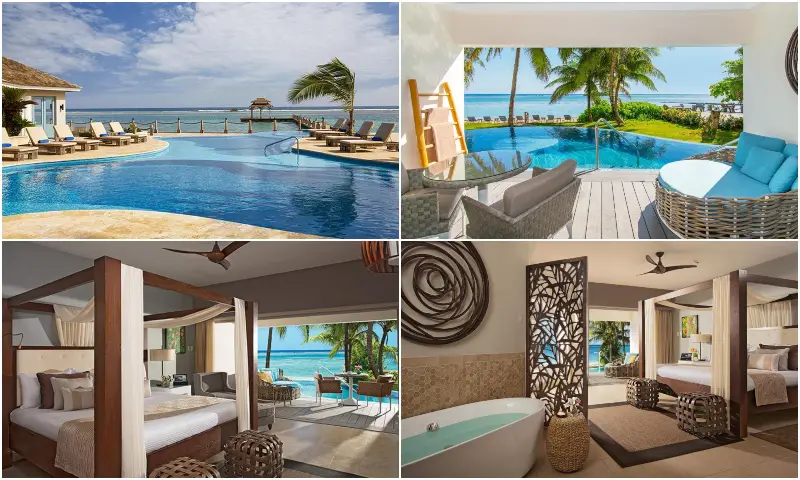
When consumers attempt to compare romantic resort options, they routinely fall victim to the “amenity trap.” This is an analytical error where properties are judged by a checklist of physical features—such as infinity pools, private plunge pools, couples’ treatment rooms, or multi-course dining options—rather than the operational choreography that determines how those features are experienced. A private plunge pool overlooking a highly trafficked resort pathway does not deliver intimacy; it delivers performance anxiety.
To accurately compare romantic resort options, the evaluation must shift from a static inventory of assets to a dynamic analysis of spatial psychology and operational design. True comparison requires examining how a resort manages three critical boundaries:
1. Spatial Insulation
This measures the degree to which a guest’s immediate environment is protected from accidental or forced interactions with other guests and staff. It is determined by acreage-to-key ratios, villa orientation, architectural acoustic buffering, and the layout of circulation paths.
2. Service Visibility
High-end properties differ sharply in their service delivery models. Some rely on high-visibility, proactive engagement (the traditional butler model), while others practice low-visibility, anticipatory maintenance (the invisible housekeeping model, where rooms are serviced exclusively while guests are away). The romantic utility of each model depends entirely on whether a couple finds reassurance in attentive care or values absolute solitude.
3. Ambient Intentionality
Every resort curates an emotional or sensory tone. An adventure-centric luxury lodge in Patagonia establishes romance through shared physical vulnerability, triumph, and collective evening debriefings. Conversely, an overwater bungalow enclave in Bora Bora builds romance through sensory deprivation, stasis, and intense focus on the immediate partner.
Oversimplifying this comparison process by relying on aggregate star ratings or crowdsourced reviews introduces significant noise. A five-star rating tells an evaluator that a property adheres to rigorous service standards—such as answering phones within three rings or delivering luggage within ten minutes—but it yields zero insight into whether the ambient noise profile or the layout of the dining room supports private, unstructured connection.
The Evolution of Luxury Romance Hospitality
The modern luxury resort landscape is not a static creation; it is the product of distinct historical, economic, and cultural shifts over the last century. Understanding this evolution explains why contemporary properties are designed the way they are, and why certain legacy models continue to influence consumer expectations.
The Era of Social Performance
In the nineteenth and early twentieth centuries, romantic travel for the global elite was deeply intertwined with social performance. The grand hotels of Europe—along the French Riviera, the Italian Lakes, and the Swiss Alps—were designed as stages. Romance was public, structured, and performative, revolving around shared grand dining rooms, evening promenades, and ballroom galas. Intimacy was found within the rigid codes of high society, and the architecture of these properties reflected this, prioritizing monumental public spaces over isolated private quarters.
The Rise of the Enclave
The mid-twentieth century witnessed the birth of the self-contained tropical enclave, a model pioneered by developers in the Caribbean and Hawaii. As commercial aviation expanded, the affluent sought escape not just from urban environments, but from social obligations themselves.
The focus shifted from “being seen” to “being hidden.” Properties began minimizing public spaces in favor of decentralized cottage layouts and private beachfront access. Romance became synonymous with isolation, a shift accelerated by the commercialization of the French Polynesian overwater bungalow in the 1960s, which turned the accommodation itself into the destination.
The Eco-Bespoke and Experiential Shift
At the turn of the twenty-first century, saturation in the tropical enclave market led to the emergence of the eco-bespoke and experiential luxury paradigms. Couples increasingly rejected passive leisure in favor of cultural immersion, ecological alignment, and wellness frameworks.
Properties in Southeast Asia, East Africa, and Central America redefined the luxury lexicon by replacing gilded fixtures with indigenous materials, open-air architecture, and hyper-local culinary programs. Romance was no longer just about isolation; it was about shared intellectual and sensory awakening.
The Contemporary Hyper-Personalized Paradigm
Today, the market is characterized by fragmentation and hyper-personalization. The widespread availability of digital information has stripped luxury of its mystique, forcing top-tier resorts to compete on operational execution rather than mere access.
Modern couples view time as their most valuable asset, meaning that the contemporary romantic resort must act as an optimizer of shared time, removing administrative friction and curating environments that adapt dynamically to the guests’ shifting psychological states.
Core Mental Models for Property Assessment
To systematically compare romantic resort options without getting distracted by superficial aesthetics, evaluators should employ specific mental models borrowed from urban planning, systems engineering, and behavioral psychology.
The Guest-to-Staff Ratio vs. The Density Coefficient
While a high staff-to-guest ratio (e.g., 3:1) is traditionally viewed as an indicator of luxury, it can backfire in a romantic context if not paired with a low Density Coefficient. The Density Coefficient can be calculated using a simple relationship:
A resort with a high staff-to-guest ratio but a low Density Coefficient results in a high concentration of humans per square foot. This increases the probability of accidental interactions, interrupting private moments. The ideal romantic property optimizes both metrics, ensuring ample service capacity without crowding the physical landscape.
The Sovereign Unit Framework
This model treats the guest accommodation not merely as a room, but as a fully functional, autonomous ecosystem. A high-scoring Sovereign Unit allows a couple to spend a 72-hour cycle without ever leaving their private boundary. This requires:
-
De-escalated room service interfaces (such as dedicated butler pass-through boxes).
-
Comprehensive dining layouts within the villa.
-
Independent, multi-zoned outdoor spaces (both shaded and unshaded).
-
Dedicated wellness facilities (such as in-villa treatment tables or steam rooms).
If a couple must leave their villa for basic needs like ice, coffee, or a view of the sunset, the unit is not sovereign; it is dependent, which introduces external variables into the romantic schedule.
The Psychological Transitions Model
This framework analyzes how effectively a resort’s layout guides the guest’s psychological state from public engagement to private intimacy. A poorly designed resort features abrupt transitions—such as a villa door opening directly onto a main resort walkway.
A well-designed property utilizes deliberate spatial buffers: winding pathways, structural entry courtyards, water elements, and layered lighting zones. These architectural features function as sensory palate cleansers, allowing couples to decompress and shift focus inward as they move through the property.
Primary Resort Archetypes and Operational Trade-Offs
The luxury market consists of several distinct resort archetypes, each optimized for a specific type of travel experience. Every archetype involves inherent trade-offs; maximizing one variable (such as historical charm) typically requires compromising on another (such as spatial square footage or modern climate control).
1. The Tropical Overwater Enclave
Primarily found in French Polynesia, the Maldives, and parts of Southeast Asia, this archetype represents the zenith of architectural isolation.
-
Strengths: Direct marine access, unobstructed horizons, absolute structural separation from neighboring keys, and dedicated marine viewing panels.
-
Weaknesses: Complete vulnerability to marine weather patterns, high ambient humidity, structural acoustic vulnerability (the sound of water lapping against pilings can become disruptive during storms), and long walks along exposed boardwalks to reach central dining hubs.
2. The Restored Historic Estate/Château
Common throughout Western Europe, New England, and parts of Asia, these properties rely on heritage, architectural gravitas, and deep regional integration.
-
Strengths: High cultural resonance, mature landscaped gardens, unique architectural layouts (no two rooms are identical), and deep integration with regional wine and culinary traditions.
-
Weaknesses: Rigid preservation laws often prevent the installation of massive open-plan bathrooms, private plunge pools, or modern soundproofing. Public spaces are frequently shared with non-resident diners or local society events, compromising privacy.
3. The Wilderness/Safari Lodge
Located in remote regions such as East and Southern Africa, Western Canada, Patagonia, and the Australian Outback, this model focuses on shared external engagement.
-
Strengths: High-stakes experiential bonding, dramatic natural settings, highly structured daily schedules that eliminate decision fatigue, and low keys-to-acreage ratios.
-
Weaknesses: Minimal scheduling flexibility (game drives and excursions dictate the rhythm of the day), communal dining traditions that can feel forced for couples seeking isolation, and inherent safety protocols that restrict unescorted nighttime movement.
4. The Cliffside Panoramist
Prevalent along the Mediterranean (Amalfi Coast, Santorini), parts of Indonesia (Uluwatu), and Big Sur, California, these resorts leverage dramatic vertical geography.
-
Strengths: Unrivaled visual perspective, dramatic sunset views, and architectural designs that naturally prevent overlooking from neighboring villas due to the stepped tiering.
-
Weaknesses: Significant vertical mobility challenges, heavy reliance on funiculars, golf carts, or exhausting staircases, and often limited or highly restricted beach access.
5. The Desert Oasis / Wellness Sanctuary
Found in the American Southwest, North Africa, the Middle East, and parts of India, these properties focus on sensory deceleration and introspection.
-
Strengths: Total absence of ambient noise, low light pollution allowing for world-class stargazing, advanced thermal facilities, and a psychological focus on rejuvenation.
-
Weaknesses: High thermal extremes can limit daytime outdoor activity during summer months; menus are frequently tilted toward restrictive wellness concepts, which may disappoint epicurean travelers.
Comparative Matrix of Luxury Archetypes
To assist travel strategists and evaluators, the following matrix breaks down the performance profiles of these five archetypes across core romantic operational variables.
The Decision Logic Engine
Choosing among these options requires applying strict priority sequencing. The common error is trying to maximize all five variables simultaneously, which results in decision paralysis or compromised choices. Instead, couples and travel planners should follow a structured elimination matrix based on their primary operational constraint.
Real-World Allocation Scenarios and Dynamics
To observe how these frameworks function under practical constraints, we can analyze several distinct couple profiles, their asset configurations, and the second-order operational effects of their choices.
The Time-Poor Executive Couple
-
Profile: Two high-earning professionals suffering from severe cognitive fatigue and decision burnout. They have a strict five-night window.
-
The Trap: Selecting a highly remote, culturally immersive lodge in Southeast Asia or a safari camp in Africa that requires three flight connections and a helicopter transfer. The travel logistics consume 36 hours of their window, and the cultural itinerary introduces new cognitive demands.
-
The Correct Allocation: A sovereign-unit desert oasis or exclusive Caribbean enclave within a three-hour direct flight radius. The priority is the elimination of logistics and the immediate establishment of sensory deceleration. The service model must be low-visibility and high-anticipation, allowing the couple to shift from executive oversight to passive relaxation without intermediary administrative friction.
The Milestone Celebrants Seeking High Narrative
-
Profile: A couple celebrating a significant anniversary, looking for deep emotional resonance and a memorable sense of place.
-
The Trap: Selecting a hyper-minimalist, ultra-modern tropical resort that, while visually stunning, lacks historical identity, regional integration, or narrative texture. The experience can feel sterile, fading quickly from memory.
-
The Correct Allocation: A historic European estate or a highly curated, ultra-luxury safari lodge. Here, the shared narrative is built through the property’s unique history or the high-stakes thrill of wildlife tracking. Romance is reinforced by the environment’s distinct personality, offering an anchor for memory preservation.
The Interdependent Wellness Advocates
-
Profile: A couple whose relationship thrives on shared physical optimization, clean gastronomy, and psychological alignment.
-
The Trap: A traditional grand hotel or classic luxury beach resort where dining revolves around heavy, multi-course French or Italian cuisine, and the fitness facilities are an afterthought in a windowless basement.
-
The Correct Allocation: A dedicated wellness sanctuary (such as top-tier properties in Thailand, India, or the Swiss Alps). The architecture explicitly incorporates thermal circuits, meditation pavilions, and natural movement spaces. The culinary program is treated with the same creative rigor as Michelin-starred dining but is structurally aligned with metabolic optimization.
The Economics of High-End Retreats: Cost, Capital, and Value
Evaluating luxury resorts requires looking beyond the baseline nightly room rate. True fiscal evaluation involves understanding the complete cost structure, the pricing mechanics of high-end hospitality, and the opportunity costs associated with short-duration, high-capital travel assets.
Direct vs. Indirect Cost Architecture
The headline rate at a top-tier romantic resort frequently accounts for less than 65% of the total capital outflow of the stay. Failing to account for secondary expenses can alter the value proposition of a property during a rigorous comparison.
-
Logistics and Transfers: Remote properties often require proprietary transit mechanisms. A seaplane transfer in the Maldives or a private helicopter charter in New Zealand can easily add $600 to $2,500 per couple to the baseline cost.
-
Incidental Outflows: In isolated enclaves (such as private islands), the resort operates as a monopoly. Food, beverage, spa services, and excursions are priced accordingly. A couple opting for a lower room rate at an isolated property may find their total spend eclipses that of an all-inclusive ultra-luxury lodge where all premium experiences are covered at the baseline.
-
Administrative Frictions: Local occupancy taxes, service levies, and conservation fees can add anywhere from 10% to 25% to the final bill, a variable that must be modeled when allocating travel budgets across international borders.
Range-Based Fiscal Analysis by Tier
To provide a clear view of the economic realities of the luxury hospitality sector, the following table models the expected financial layout for a five-night stay across three tiers of high-end romantic properties.
Analytical Toolkits and Evaluation Methodologies
For those who wish to compare romantic resort options with professional rigor, standard travel search engines are structurally inadequate. Evaluators should utilize dedicated toolkits that break down a property’s physical and operational attributes into quantifiable metrics.
The Spatial Audit Checklist
Before confirming a reservation intended for absolute intimacy, an evaluator should request or research the specific spatial metrics of the assigned key block.
-
Sightline Assessment: Does any portion of the villa’s primary outdoor relaxation zone (deck, pool, lounge) fall within the direct line of sight of an adjacent villa, a public walkway, or a marine traffic route?
-
Acoustic Envelope: Is the villa constructed using mass timber, concrete, or traditional thatch? What is the distance from the villa to the nearest communal infrastructure (e.g., generators, kitchens, main pool, water sports hubs)?
-
Circulation Isolation: Do service staff utilize separate, hidden access pathways (such as the back-of-house service tunnels common in ultra-luxury Maldivian properties), or do they share the same footpaths as the guests?
The Service Model Diagnostic
Understanding how a resort trains its staff can reveal how relaxed the atmosphere will be. Evaluators should check for three distinct operational indicators:
-
The In-Villa Check-In: Avoid properties that require guests to stand at a public reception desk upon arrival. True luxury romantic properties bypass the lobby entirely, transferring guests directly from their arrival vehicle to their private villa, where identity verification and administrative sign-offs occur in private.
-
We mandate ‘Invisible Housekeeping.’ Properties must utilize guest-presence sensors, butler-coordination, and reservation monitoring to ensure that service occurs exclusively during guest absence. The presence of a housekeeping cart outside a villa or an unauthorized knock is a categorical failure of operational synchronization.
-
Preference Memory Systems: Top-tier resort groups utilize centralized customer relationship management networks that track nuanced preferences across properties—such as specific pillow configurations, dietary targets, or preferred ambient room temperatures. This eliminates the need for the couple to repeat basic instructions, reducing communication friction.
Risk Management, Failure Modes, and Friction Points
No resort is immune to operational breakdown or environmental interference. When preparing to compare romantic resort options, a key part of the process involves identifying and mitigating risks that can compromise the travel experience.
The Taxonomy of Romantic Destination Failure Modes
1. Micro-Demographic Pollution
This occurs when a resort fails to partition its guest profiles. A luxury property that accepts a 40-person corporate incentive retreat or a large multi-generational family group alongside couples seeking isolation will experience an immediate degradation of its ambient tranquility. Public spaces become dominated by group dynamics, shifting the resort’s atmosphere away from intimacy.
2. Environmental and Seasonal Volatility
Relying strictly on calendar-year averages for weather planning can introduce significant risk. Shoulder seasons offer attractive pricing but bring hazards like sudden monsoons in Southeast Asia, seaweed accumulations (sargassum) in the Caribbean, or red tides in marine sanctuaries. Furthermore, off-season travel often coincides with a resort’s scheduled maintenance or nearby construction, introducing unexpected visual and acoustic disruption.
3. Service Asymmetry
A resort may possess world-class hardware (architecture and design) but suffer from broken software (service execution). This is common in properties that rely heavily on seasonal student labor or experience high staff turnover. The result is a frustratingly inconsistent experience, where cocktails take 45 minutes to arrive, spa reservations are cross-booked, and guest requests require multiple follow-ups.
4. Structural Wear and Tear
Tropical and coastal environments are unforgiving to physical infrastructure. Salt air, high humidity, and intense solar radiation cause rapid degradation of timber decks, private plunge pool tile liners, and mechanical climate control systems. Properties that defer capital expenditure quickly begin to look worn. This can ruin the premium aesthetic and cause mechanical failures, such as a malfunctioning air conditioning unit in a tropical climate.
The Pre-Investment Risk Mitigation Matrix
To insulate a luxury travel investment from these failure modes, planners should execute a structured verification protocol before capital deployment.
Long-Term Planning, Adaptation, and Portfolio Strategy
Discerning couples and their family offices increasingly approach travel not as a series of isolated, ad-hoc decisions, but as a long-term asset portfolio. A well-managed travel strategy balances different styles of destinations across a multi-year cycle, preventing experience fatigue and ensuring that each getaway matches the couple’s evolving psychological and physical milestones.
The 3-Year Relationship Travel Rotation
To maximize cognitive variety and emotional engagement, a portfolio strategy often avoids repeating the same style of resort back-to-back. Instead, it rotates across different operational archetypes:
-
Year 1: Absolute Deceleration (The Recovery Asset): Optimized for pure isolation and stress reduction. Typically, a tropical overwater enclave or an isolated desert sanctuary. The focus is entirely on rest and restoring personal energy.
-
Year 2: Shared Intellectual Growth (The Experiential Asset): Optimized for novel learning and cultural discovery. A restored historic estate or a conservation-focused wilderness lodge. The focus is outward, building memories through shared discovery and unique environments.
-
Year 3: Somatic and Physical Optimization (The Capital Investment Asset): Optimized for health, longevity, and vitality. A dedicated medical-wellness sanctuary or mountain retreat. The focus is inward and physical, prioritizing health optimizations that support long-term energy.
The Adaptive Travel Execution Checklist
This layered operational checklist provides a roadmap for evaluating and executing a premium travel plan, from initial research to the post-stay debrief.
Metrics, Documentation, and Evaluation Ecosystems
To maintain an objective approach when you compare romantic resort options, it is useful to shift away from emotional reactions and utilize structured documentation. This ensures that future travel allocations are based on clear data rather than romanticized or clouded memories.
Leading vs. Lagging Indicators of Property Quality
When auditing a prospective resort, look for specific operational markers that indicate a property’s current health before booking:
Leading Indicators (Predictive of Real-Time Experience)
-
Staff Retention Rates: A high percentage of senior management and line staff remaining with a property over three years indicates healthy operations and consistent service delivery.
-
CapEx Reinvestment Cycles: Properties that publish structural update schedules or close completely for annual soft renovations show a commitment to maintaining their hardware.
-
Pre-Arrival Responsiveness: The speed, precision, and personalization of the pre-arrival guest services team serve as an excellent indicator of the resort’s daily operational efficiency.
Lagging Indicators (Reflective of Historic Performance)
-
Consecutive Travel Awards: While sometimes influenced by marketing spend, long-term inclusion on rigorous industry shortlists indicates stable standards.
-
Long-Term Guest Return Rates: A property where repeat guests make up over 35% of bookings generally indicates a reliable experience that holds up over multiple visits.
Post-Stay Property Audit Ledger
The following documentation templates demonstrate how a couple or a family office can log and review performance metrics, tracking how effectively a property delivers on its luxury promises.
Deconstructing Common Industry Misconceptions
The luxury travel industry relies on several marketing concepts that frequently lead consumers to make poor booking decisions. Dismantling these myths is essential for a clean, data-driven comparison.
“All-Inclusive” Invariably Means Low Quality
-
We decouple the term ‘all-inclusive’ from its mass-market associations. In the Sovereign-grade sphere, the model signifies total freedom from transactional friction—a seamless, bespoke ecosystem where every nuance of the guest journey is pre-managed and rendered invisible. Top-tier safari camps, private islands, and heli-ski lodges use all-inclusive pricing to remove financial transactions from the guest experience.
-
By eliminating the need to sign bills or review charges after every meal or activity, the resort removes a subtle source of everyday friction, allowing couples to remain fully immersed in their environment.
The Best Villas Are Always the Highest Category
-
We classify the industry’s reliance on ‘sheer square footage’ as a misaligned design strategy. Properties frequently compromise privacy by positioning grand villas near central hubs for butler logistics or exposing them to public sightlines for marketing. We reject this trade-off; an estate must offer both scale and absolute seclusion.
-
A lower-category villa situated at the quiet edge of a peninsula or hidden behind natural vegetation often provides superior privacy and better acoustic isolation than the property’s flagship suite.
High Room Rates Guarantee Peace
-
The Reality: High nightly rates filter for wealth, not behavior. High-profile wedding parties, corporate celebrations, and digital influencers capturing content in public spaces consistently disrupt the luxury experience. We require properties to implement aggressive access controls to insulate the environment from these externalities.
-
True tranquility is a product of architectural layout and strict operational enforcement—such as adults-only zoning, smartphone bans in wellness areas, and limits on group bookings—rather than price alone.
Remote Locations Ensure a Natural Experience
-
The Reality: A resort located deep in a remote wilderness must generate its own power, desalinate its own water, and manage its own waste. Without meticulous engineering, this infrastructure can intrude on the guest experience.
-
A poorly designed eco-lodge may have its villas downwind from diesel generators or near waste treatment facilities, causing subtle but real disruptions. True luxury lies in how cleanly a resort hides its heavy support infrastructure from the guest footprint.
Synthesis and Analytical Conclusions
Evaluating high-end romantic resorts requires looking past carefully staged photography and generic marketing copy to analyze the operational realities of a property. We define intimacy as an ambient requirement, not an amenity. We mandate that properties engineer this condition through the precise coordination of architecture, service design, spatial psychology, and environmental management. Any estate failing to orchestrate these four pillars fails the Sovereign standard.
When preparing to compare romantic resort options, aim to find a property that aligns with your current energy needs. You might need a high-isolation tropical villa to recover from executive burnout. Alternatively, a historic European estate offers a shared cultural narrative, while a dedicated wellness sanctuary focuses on physical rejuvenation. Ultimately, success comes down to meticulous alignment.
Treat travel planning as a strategic asset allocation. By using structured metrics to evaluate space and service, you can easily look past lookalike luxury. This disciplined approach protects your most valuable resource: shared time.